JSAI 2026 (Poster, 1Yin-A-29), June 2026 · First author
AI for drug discovery / Computational proteomics / Machine learning
M.S. candidate at the Graduate School of Pharmaceutical Sciences, Kyoto University.
Developing computational models for proteomics and drug discovery.
Profile
M.S. candidate at the Graduate School of Pharmaceutical Sciences, Kyoto University, developing computational models for proteomics and drug discovery. I build physically grounded generative models of LC-MS data, implement them at scale with GPU acceleration, and validate them on real experimental data. I have also applied statistical and machine learning methods to protein-ligand binding affinity prediction, proposing evaluation criteria and models better aligned with practical drug discovery needs. I am particularly interested in learning latent molecular properties from experimental measurements, sequences, and structures to advance drug discovery.
Publications
JSAI 2026 (Poster, 1Yin-A-29), June 2026 · First author
J. Chem. Inf. Model. 2024, 64 (23), 8824–8837 · Co-author
Preferred Networks Tech Blog, Oct 2025 · Author
Selected Work
Developing a novel approach to peptide and protein identification and quantification using posterior inference in a hierarchical mixture-of-mixtures model grounded in the physical processes underlying LC-MS data generation, through the model formulation, objective function, and prior distributions. Implemented the model in PyTorch, exploiting data sparsity and GPU acceleration, and validated it on experimental LC-MS data. The unified generative framework identified and quantified additional peptides while agreeing with established pipelines on shared identifications and quantitative trends.
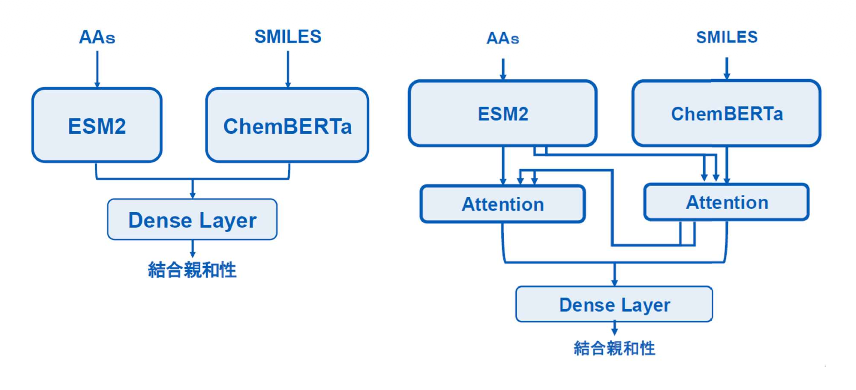
Evaluated the multimodal foundation model MAMMAL with a protein-family-level out-of-distribution split. Despite strong overall performance, it showed a negative correlation between predicted and measured affinities for unseen protein families. Proposed a model integrating pretrained ESM-2 and ChemBERTa via cross-attention, which matched MAMMAL's overall performance with about one-quarter of the parameters and generalized more robustly to unseen protein families.
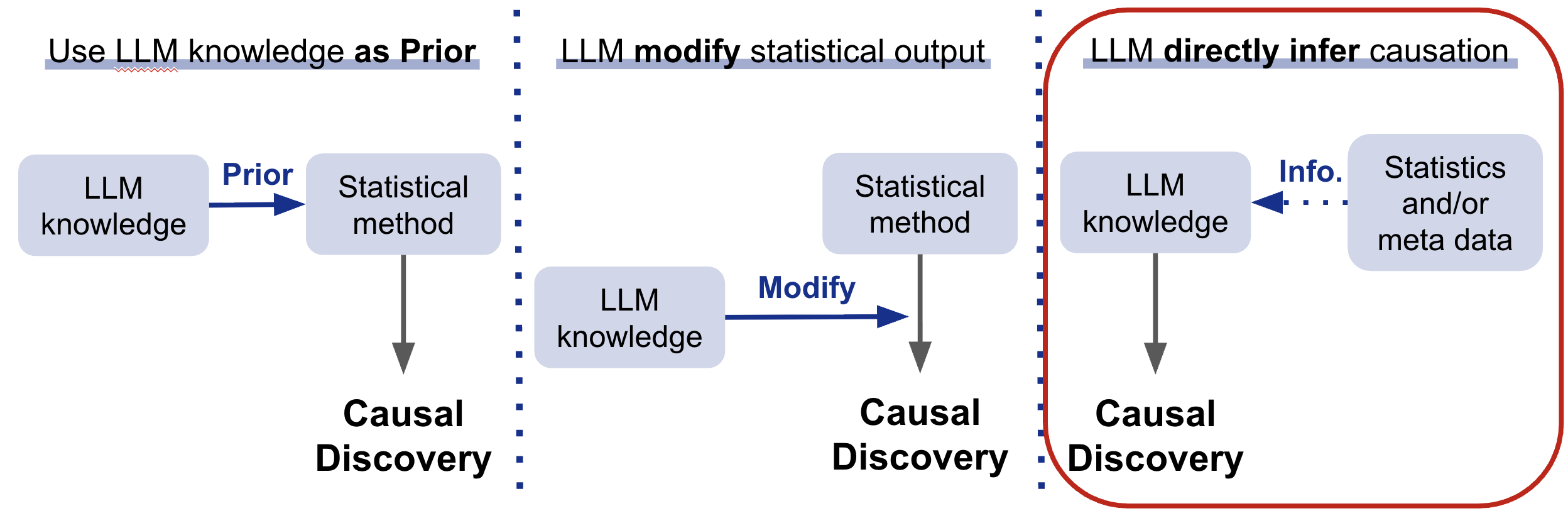
Investigated whether biological knowledge encoded in LLMs can support gene-network reconstruction, as an alternative to costly expert curation behind databases such as KEGG. On a 19-gene breast-cancer KEGG pathway, a pairwise GPT-5 Nano workflow outperformed conventional causal-discovery methods.
Read the articleCompeted as a lab team in a post-hematopoietic stem cell transplantation prognosis prediction competition. Responsible for LightGBM tuning, earning a Silver Medal (20th place). Leveraged Kaplan-Meier transformation, a pairwise loss function, and seed averaging.
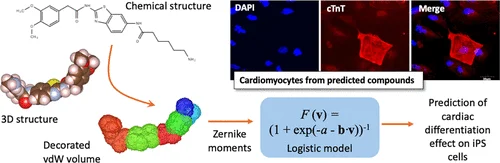
Competition pageResearch Assistant in the Packwood Group, iCeMS. Used machine learning to predict compounds that induce cardiomyocyte differentiation from human iPS cells, and designed candidate molecules by decomposing known inducers into medicinal-chemistry-informed fragments and recombining them. Experimental follow-up confirmed that a designed compound induced cardiomyocyte differentiation, leading to a peer-reviewed publication.
Read the paperBuilt a LINE Bot using Google Apps Script, Google Calendar API, and LINE API that notifies assigned members the day before their LC/MS/MS maintenance shift. Actively used by lab members on a daily basis.
Experience
Apr 2025 – Mar 2027 (expected)
Affiliated with the Biomolecular Measurement Laboratory (Supervisor: Prof. Yasushi Ishihama; Collaborating supervisor: Prof. Kazuyoshi Yoshii). Research in computational proteomics and statistical signal analysis for LC-MS/MS data, which I have pursued since Apr 2024.
Aug – Oct 2025
Multimodal learning for protein-ligand binding affinity prediction. Revealed the limited generalization of MAMMAL to unseen protein families and proposed a lighter ESM-2 × ChemBERTa cross-attention model that generalized more robustly.
Aug – Sep 2025
Causal gene-network inference with LLMs. Designed and evaluated a pairwise workflow that outperformed conventional causal-discovery methods on a breast-cancer KEGG pathway.
Feb – Mar 2025
Served as the company's first dedicated data scientist during an on-site research internship in Wellington, New Zealand. Independently proposed the preprocessing and built models to identify fluorescent labels from two-dimensional spectral measurements and visualize label-specific features.
Oct 2022 – Mar 2025
Built Python modeling, preprocessing, and evaluation pipelines for medical-image segmentation, interpretable health-risk prediction, computer vision, and optimization — including defect detection with SAM, safety behavior monitoring with YOLO, schedule optimization with OR-Tools, and a RAG chatbot.
Apr 2020 – Mar 2025
Started research on hierarchical probabilistic modeling for LC-MS/MS proteomics in Apr 2024.
Sep 2023 – Mar 2024
Contributed to a web application built with the OpenAI API. Implemented backend APIs in Go and improved the chat UI in Next.js, including Markdown rendering and streaming response delivery.
Jun 2022 – Mar 2023
In silico candidate molecule design for cardiomyocyte differentiation from human iPS cells, leading to a peer-reviewed publication in J. Chem. Inf. Model.
Skills
✔ Broad knowledge and experience across statistics, machine learning, deep learning, and computer science.
✔ Wide domain knowledge in pharmaceutical and life sciences, with expertise in proteomics.
Python; working knowledge of TypeScript and Go. Git, Docker, Linux, React, Next.js, Gin, Ruby on Rails, OpenAI API
PyTorch, scikit-learn, Transformers, XGBoost, LightGBM; representation learning, causal discovery, survival modeling
Expectation-Maximization algorithm, Optimal transport, Mixture-of-mixtures models, Variational Bayes
Protein and molecular language models, protein-compound binding-affinity prediction, molecular representation, proteomics, LC-MS/MS